Best Free QR Code Generators for Indian Businesses in 2026: 7 Compared
We compared the 7 best free QR code generators for Indian businesses — static vs dynamic, scan limits, UPI codes, and one free self-hosted option with zero limits.
 CodeFree Team
November 17, 2026
15 min read
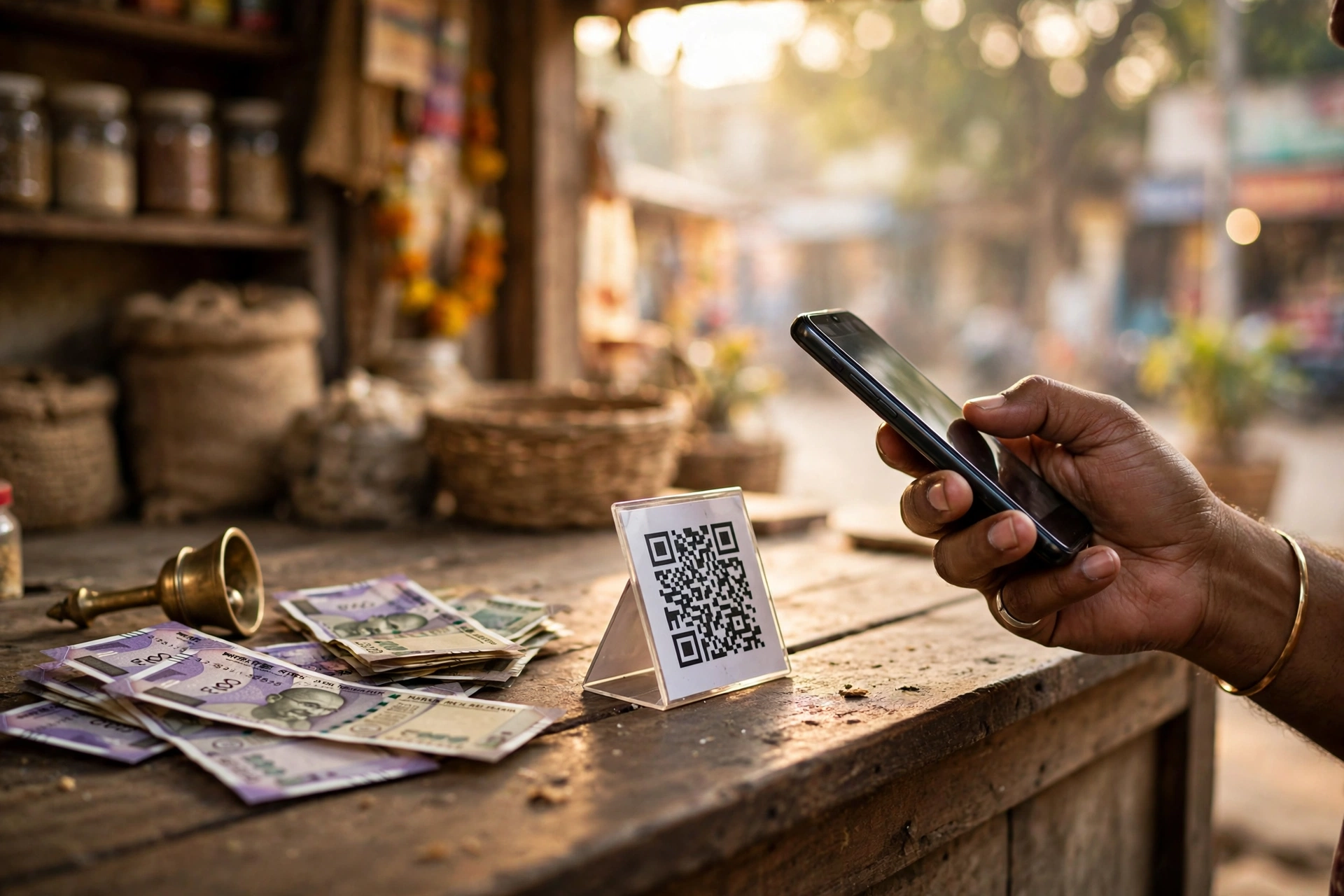
A QR code is the cheapest salesperson a small Indian business can hire. It sits on a shop counter, a menu card, a visiting card or a delivery bag, and quietly turns a passer-by into a WhatsApp chat, a UPI payment or a Google review. The problem is not making one — dozens of tools will do it for free. The problem is picking a free tool whose code still works six months after you printed 500 copies of it.
That is the real test in this comparison. We looked at the seven best free QR code generators available to Indian businesses in 2026 and judged them on what matters after printing: does the code expire, is there a scan limit, does a stranger's phone show an ad or a logo popup before reaching your page, can you print it big and sharp, and what does it cost when you outgrow the free tier? One of the seven is CodeFree's own free PHP QR code generator, which you can host on your own website — no subscription, no scan limits, no ads on your customers' phones.
1. Static vs Dynamic: The One Decision That Matters
Every QR generator sells you one of two products, and most of the confusion in this market comes from not knowing which one you are getting.
A static QR code stores the destination directly inside the pattern. Nothing sits in the middle, so there is nothing to host and nothing to bill. That is why static codes can genuinely be free forever — no scan limit, no expiry, no subscription. The trade-off: once printed, the destination can never change. If the URL moves, the code is dead paper.
A dynamic QR code points to a short redirect link, and that link points to your destination. Because a server sits in the middle, you can change the destination after printing and see how many people scanned. That service has to be paid for by someone, which is why dynamic codes are where every "free" plan hides its limits: a cap on scans, a cap on the number of codes, ads shown to the person scanning, or codes that stop working when a trial ends.
The rule of thumb for Indian small businesses: use a static code when the destination will never move — your UPI ID, your WiFi password, your Google Maps location, a permanent website URL. Use a dynamic code when the destination will move — a menu that changes with the season, a festive offer page, a campaign landing page. Entry-level dynamic plans in 2026 typically run $5 to $16 a month, with a median around $11 a month on monthly billing (QRBench index, August 2026). Before you pay, do the reprint maths: if a menu reprint costs ₹2,500–₹6,000, two reprints a year already cost more than a year of a small dynamic plan.
2. What to Check Before You Print a Single Code
Before you fall in love with any generator, run through this five-point checklist. It takes two minutes and saves a reprint.
Scan limit. Static codes have no scan limit because there is no server counting. Free dynamic codes almost always have one — QR TIGER's free dynamic codes, for example, stop at 500 scans each. A busy Saturday at a food stall can burn through that.
Expiry. Ask what happens to the code if you stop paying, or if you never pay at all. Static codes do not expire. Free dynamic codes follow the plan: scan caps, unused-code cleanup, ads, or the day the trial ends.
What the customer sees. Some free tiers show the scanner an ad or a logo popup before your page loads. QR TIGER's free dynamic scans show a QR TIGER logo popup; The QR Code Generator's free dynamic scans show an ad. Your customer did not pay for the tool — they pay with attention.
Print quality. A QR code on a shop banner or a flex board needs a vector file (SVG, PDF or EPS), not a small PNG. PNG is fine for a visiting card. If the tool only gives you a low-resolution PNG, it is not a print tool.
Error correction. A code printed on a delivery bag or a table tent gets scratched, folded and stained. Higher error-correction levels let a code scan even when up to 30% of it is damaged. If you print on anything that gets handled, this matters more than the colour of the dots.

3. The 7 Best Free QR Code Generators We Compared
1. QRCode Monkey — Best for a permanent static code
QRCode Monkey is the simplest honest deal on this list. Static codes are unlimited and free, with no stated scan limit and no expiry, and you do not even need an account. You get logo upload, brand colours, custom shapes and downloads in PNG, SVG, PDF and EPS — the full print kit, free.
The catch is that it is a static-only tool in its free form. Dynamic codes live in a separate paid product, so if you need to edit a destination after printing or see scan counts, this is not your tool. But for the one job most Indian shops actually need — a permanent UPI payment code, a WiFi code, a Google review code — it is hard to beat. Free plan: unlimited static codes. Best for: one-off print jobs and anything that will never change.
2. QR TIGER — Best free taste of dynamic codes
QR TIGER has the most balanced free setup if you want to try dynamic codes without paying. The free plan includes unlimited static codes plus three dynamic codes, each capped at 500 scans, with basic analytics. Paid plans start at $7 a month billed annually ($9.99 month-to-month) for 12 dynamic codes with unlimited scans, and $16 a month for the Advanced tier.
The honest warning: those three free dynamic codes are a trial in everything but name. The 500-scan cap is real, and free scans show a QR TIGER logo popup before your page. Use it to test whether dynamic codes are worth paying for; do not print 500 takeaway bags with a free dynamic code. Free plan: unlimited static + 3 dynamic (500 scans each). Best for: trying dynamic codes before committing.
3. The QR Code Generator — Best for two repointable codes
The QR Code Generator (qr-code-generator.com) offers two forever-free dynamic codes that stay live while your account remains active, with no free scan cap stated on its official pages. That makes it genuinely useful for a small shop that has exactly two things that change — say, a menu and a festive offer page.
The trade-offs are visible: an ad on free dynamic scans, a mark on free downloads, and only 14 days of scan analytics. The Flex plan costs $5 a month billed yearly and brings five ad-free dynamic codes with 60 days of history. Free plan: unlimited static + 2 dynamic codes (with ads). Best for: a shop with one or two pages that change.
4. Canva — Best when the QR lives inside a design
If you already design your menu cards, posters or Instagram posts in Canva, its built-in QR generator is the path of least resistance. You generate the code inside the design itself — no downloading, no re-uploading, no alignment fiddling. Both static and dynamic options are available, and the dynamic code is editable.
The catch is branding: on the free plan, the Canva logo sits inside the QR square. For a poster or a social-media graphic that is fine. For a premium-looking visiting card, it is not. Free plan: QR codes inside Canva designs, with Canva branding. Best for: posters, menus and social graphics you design in Canva anyway.
5. Adobe Express — Best simple static code inside a design tool
Adobe Express includes a QR code generator inside its browser-based design editor. Enter a URL, style it, and download it in PNG, JPEG or PDF. The generator itself is free — you do not need an Express Premium plan — and the codes do not expire.
What you get is a static code only: the destination cannot be changed after printing, and there is no scan tracking. It is a clean, simple option if you already use Adobe Express for your shop's creatives and want a code that just works. Free plan: unlimited static codes, no expiry. Best for: Adobe Express users who need a quick static code.
6. Bitly — Best if you also need short links
Bitly is a link-shortening service first and a QR generator second, and its free plan reflects that: 5 short links a month and 2 QR codes a month, with 90 days of analytics on the Core plan. The QR codes are dynamic — they point to a bit.ly link — so they are editable and trackable, but they are tied to your Bitly account and its limits.
Two codes a month is fine for a newsletter or a one-off campaign. It is not a print-run tool. Paid plans start at $10 a month billed annually (Core) and $29 a month (Growth). Free plan: 2 QR codes a month. Best for: occasional campaigns alongside short links.
7. CodeFree QR Code Generator — Best free self-hosted option (no limits, no ads)
This is the odd one out on the list, and deliberately so. The CodeFree QR Code Generator is not a SaaS tool — it is a free PHP script you download and run on your own website or hosting. There is no account, no monthly plan, no scan limit and no ad shown to your customers, because there is no middleman server at all.
It generates seven QR types — Website, Text, WiFi, Contact (vCard), UPI Payment, Email and Phone — with custom colours, four sizes, four error-correction levels and print-ready PNG downloads, plus a recent-history list saved in the browser. The UPI Payment type is the one Indian shops will use most: type your UPI ID and an amount, and you get a scannable payment code for your counter. Because you host it yourself, the codes it makes are yours forever — no subscription lapse can ever kill them. The only cost is your own hosting, which most small businesses already pay for. Free plan: everything, forever, on your own server. Best for: Indian shops and freelancers who want UPI, WiFi and contact codes with zero ongoing cost and zero dependence on a SaaS company.
4. Side-by-Side Comparison Table
| Tool | Free static codes | Free dynamic codes | Scan limit (free) | What the scanner sees | Print output | Paid from |
|---|---|---|---|---|---|---|
| QRCode Monkey | Unlimited, no account | None (paid only) | None | Your page, no ad | PNG, SVG, PDF, EPS | PRO (price on site) |
| QR TIGER | Unlimited | 3 codes | 500 scans per code | Logo popup | PNG, SVG | $7/month (annual) |
| The QR Code Generator | Unlimited | 2 codes | No cap stated | Ad on free scans | PNG (marked free) | $5/month (annual) |
| Canva | Yes, in designs | Yes, editable | Not stated | Canva logo in code | Via design export | Canva Pro |
| Adobe Express | Yes, no expiry | None | None | Your page, no ad | PNG, JPEG, PDF | Free (Premium optional) |
| Bitly | No (dynamic only) | 2 codes/month | Account limits | bit.ly redirect | PNG, SVG (paid) | $10/month (annual) |
| CodeFree QR Generator | Unlimited, self-hosted | Not applicable | None | Your page, no ad | Print-ready PNG | Free forever |
Prices and limits are from each vendor's published pages as checked in November 2026. Free plans change — check the tool's own page before a big print run.
5. Which One Should You Pick?
You run a kirana store, salon or clinic and need a UPI payment code on the counter: CodeFree's generator or QRCode Monkey. The destination (your UPI ID) will never change, so static is correct, and neither option will ever show your customer an ad or stop working. CodeFree wins if you also want WiFi and contact codes from one place and already have hosting.
You run a cafe or restaurant and your menu changes: QR TIGER's free tier to test, then its $7 Regular plan — or The QR Code Generator's $5 Flex plan if you only have two changing pages. Do the reprint maths first: if you change the menu twice a year, a dynamic plan is cheaper than two reprints.
You are a freelancer or creator and the code goes on a poster or visiting card: QRCode Monkey for a clean vector file, or Canva/Adobe Express if the code lives inside a design you are already making. Download SVG or PDF, never a small PNG, for anything bigger than a visiting card.
You run campaigns and need scan data: QR TIGER or The QR Code Generator — but read the free analytics window (14 days on The QR Code Generator) and the scan caps before you print. If you need real tracking, budget for the paid tier from the start rather than discovering the cap mid-campaign.
You want zero dependence on any company's free tier: host the CodeFree script on your own site. It is the only option on this list where no company can change the terms, add an ad or switch off your codes — because there is no company in the middle.

6. The UPI QR: What Indian Businesses Should Know
For most Indian small businesses, the single most valuable QR code is the UPI payment code — and it is also the one where the free-tier traps matter least, because the payload is finished and local: your UPI ID and optionally a fixed amount. That makes it a perfect static-code job.
A few practical points. First, always test-scan your printed UPI code with two different apps (say Google Pay and PhonePe) before you print in bulk — a code that scans in one app and fails in another is a real thing, usually caused by low contrast or a damaged print. Second, print UPI codes at high error-correction level: the counter code gets wiped, splashed and scratched, and error correction is what keeps it scannable. Third, never pay a monthly subscription just for a UPI code — any tool that charges you monthly for a static payment code is selling you something you can generate once, for free, forever.
One more thing worth knowing: UPI crossed ₹31.5 lakh crore in transaction value in October 2026, with over 25 billion transactions in a single month. Your customers already scan. The question is only whether the code they scan belongs to you — or carries someone else's ad, logo or scan limit along with it.
7. Five Mistakes That Kill a Good QR Code (and Getting Set Up in 10 Minutes)
Mistake 1: Printing a dynamic code from a free trial. The code works beautifully for a month, the trial ends, and 500 printed table tents go dead overnight. If the destination matters, either pay for the dynamic plan or use a static code.
Mistake 2: Low-contrast colours. A light-grey code on a white card looks premium and scans terribly. Keep dark codes on light backgrounds, and test-scan in dim shop lighting, not just under your desk lamp.
Mistake 3: Printing too small. A code smaller than about 2 cm square is a gamble on a busy counter. The rule is simple: the further away the scanner stands, the bigger the code must be. A banner code should be measured in tens of centimetres.
Mistake 4: No quiet zone. A QR code needs a clean white margin around it — roughly four modules wide. Text, borders or design elements crowding the code are the most common reason a printed code fails.
Mistake 5: Never test-scanning the actual print. The file on your screen is not the product. Scan the printed copy with two phones, from a normal distance, in normal light. If it hesitates, fix it before the print run, not after.
Set up in 10 minutes: pick your tool from the list above, generate your UPI code first (it is the one your customers will use daily), then your WiFi and Google review codes. Print one copy, test-scan it with two phones, and only then send the full run to the printer. If you want the whole thing on your own website with no subscription and no limits, download the free QR Code Generator PHP script from CodeFree — it takes about five minutes to set up on any PHP hosting, and every code it makes is yours forever.
Frequently Asked Questions
Do free QR codes expire?
Static QR codes do not expire — there is no server involved, so nothing can switch them off. Free dynamic codes do follow the plan: scan caps, unused-code cleanup, ads, or the day the trial ends. If a code must work forever, use a static code or a self-hosted generator.
Which free QR code generator is best for a small business in India?
For a UPI payment code, WiFi code or any permanent destination, QRCode Monkey or CodeFree's free self-hosted generator are the strongest free choices — unlimited static codes, no expiry, no ads on the customer's phone. For menus or offers that change, QR TIGER's free tier is the best way to test dynamic codes before paying $7 a month.
Can I make a UPI QR code for free?
Yes. A UPI QR code is just your UPI ID (and optionally an amount) encoded as a static QR code. You can generate one free with QRCode Monkey, Adobe Express, or CodeFree's QR Code Generator script, print it, and it will work indefinitely with Google Pay, PhonePe, Paytm and other UPI apps.
Are dynamic QR codes worth paying for?
Yes, but only when the destination changes. If you reprint menus, offer posters or campaign cards more than once or twice a year, a $5–$7-a-month dynamic plan is usually cheaper than the reprints. If the destination never moves, paying monthly for a dynamic code is money wasted — a free static code does the same job forever.
Keep reading

Best Free Password Managers for Indian Users in 2026: 7 Compared
Bitwarden, Google, Proton Pass, LastPass, NordPass, KeePassXC — plus a free CodeFree generator. We checked every vendor's pricing page in November 2026, so this list only includes managers that are actually free (two famous names no longer are).
Read article
Best Free Pomodoro Timer Apps for Indians in 2026: 7 Compared
7 free Pomodoro timer apps compared for Indian students and freelancers — incl. a free, no-sign-up CodeFree timer that works offline.
Read article
Best Free Resume Builders for Indian Job Seekers in 2026: 7 Compared
7 free resume builders compared for Indian job seekers — truly free downloads, ATS safety, and the no-signup option.
Read article