New UPI Rules in 2026: Transaction Limits, Merchant Charges & What Indian Small Businesses Must Do
UPI's biggest policy shift is here: 0.4% merchant charges above ₹2,000, ₹5 lakh limits for tax and hospital payments, UPI Lite upgrades and new fraud alerts. What changed, what's still free, and what Indian small businesses must do.
 CodeFree Team
October 18, 2026
7 min read
CodeFree Team
October 18, 2026
7 min read
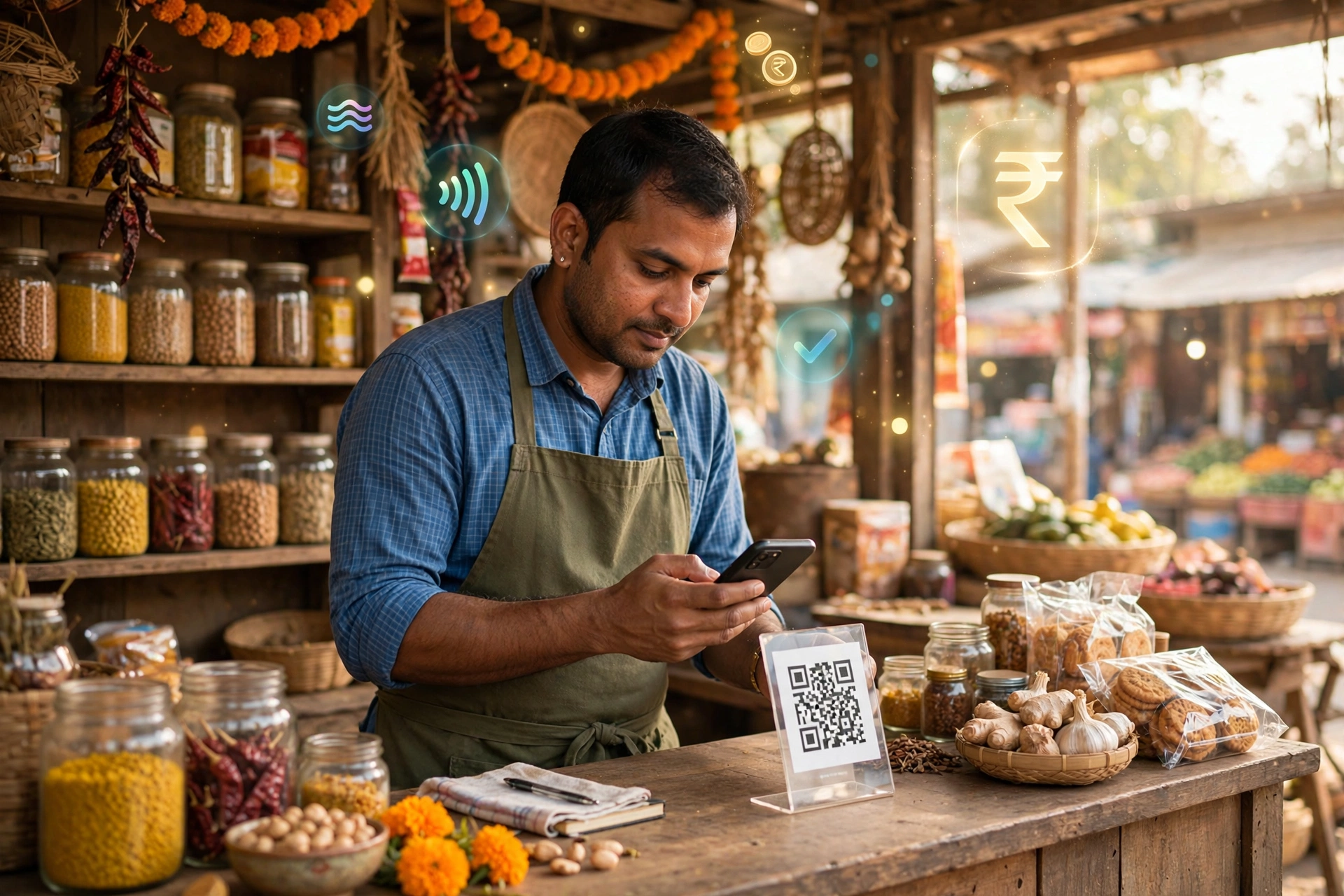
If you run a shop, freelance, or small business in India, you probably live on UPI. A quick scan of a QR code replaces the old cash register — and for years it has been completely free. But 2026 brought the biggest policy shift in UPI's history: merchant charges on certain transactions, higher limits for big payments, and a wave of new features from NPCI. Here's what actually changed, what stayed free, and what you need to do about it.
1. What Actually Changed in UPI in 2026 — A Quick Summary
There are several moving parts, so let's lay them out in one place:
| Rule / Feature | Status | What It Means |
|---|---|---|
| MDR on merchant transactions | New — 0.4% from Oct 15, 2026 | Applies to person-to-merchant UPI above ₹2,000; capped at ₹300 per transaction; paid by the merchant, never the customer |
| UPI free for customers | Unchanged | Person-to-person transfers remain free at any amount; merchant payments up to ₹2,000 stay free |
| UPI limit for tax, hospitals, education, insurance | Raised to ₹5 lakh per transaction | Large hospital bills and tax dues can now be paid in one UPI transaction |
| Standard UPI limit | Unchanged — ₹1 lakh per day | Regular transfers between people stay capped at ₹1 lakh a day (aggregate across all apps) |
| Inactive UPI IDs | Deactivated after 1 year of no use | Old, unused UPI IDs are disabled for security; your bank account is unaffected |
| UPI Lite | Per-transaction limit raised to ₹1,000 | Faster PIN-less small payments; wallet limit still ₹2,000 |
| Fraud alerts | New real-time warnings | You now get warned before paying a UPI ID reported for fraud |
The headline that matters most for businesses is the MDR — let's unpack it.
2. The October 2026 MDR: 0.4% on Merchant UPI Transactions Above ₹2,000
From October 15, 2026, a 0.4% Merchant Discount Rate (MDR) applies to specified person-to-merchant UPI transactions above ₹2,000. Key facts:
- The customer pays nothing extra. MDR is a processing fee within the payment ecosystem, paid by the merchant's side — it is not a tax, and it doesn't show up on the buyer's bill.
- Capped at ₹300 per transaction. On a ₹1 lakh merchant payment, 0.4% would be ₹400 — but the cap keeps it at ₹300.
- Small payments stay free. Merchant transactions up to ₹2,000 remain zero-charge, and small merchants under the zero-MDR framework stay exempt. NPCI estimates around 96% of person-to-merchant transactions are unaffected.
Why did this happen? Running one of the world's largest real-time payment systems costs money — banks and apps bore that cost for years while UPI volume exploded. The MDR makes the system sustainable without touching the small, everyday payments that most Indians make.
3. Transaction Limits in 2026: What's the Real Maximum?
There's no single "UPI limit" — it depends on what you're paying for:
- Person-to-person / standard merchant payments: ₹1 lakh per day, aggregated across every UPI app linked to your account. Splitting one payment into several smaller ones does not get around this — it's a daily aggregate cap.
- Tax payments, hospital bills, education fees, insurance premiums: up to ₹5 lakh per transaction at eligible verified merchants. This is a genuine game-changer for families settling large hospital bills without visiting a bank.
- Verified merchants in select categories (travel, healthcare, education): can accept up to ₹10 lakh per day in aggregate.
- IPO applications / Retail Direct Scheme: up to ₹5 lakh per transaction.
Your bank can still set a lower internal limit than the NPCI ceiling, so check your bank's app if a large payment gets declined.
4. UPI Lite, UPI Circle and Other 2026 Features Worth Knowing
Beyond limits and charges, NPCI has rolled out features that genuinely improve daily life:
- UPI Lite (₹1,000 per transaction): A pre-loaded balance (up to ₹2,000) that pays without pinging your bank in real time and without a PIN. Perfect for chai, auto fares, and groceries — the digital equivalent of pocket change.
- UPI Circle: Delegated payments — authorise a family member (say, a parent or teenager) to pay from your UPI account with limits you control. Useful for families where not everyone has their own bank-linked UPI.
- Two-factor authentication upgrade: From April 2026, UPI implementations need dynamic security measures, strengthening the authentication behind every payment.
- Tighter operational rules: NPCI now caps high-frequency backend calls — balance checks limited to about 50 per app per day, autopay mandates pushed to off-peak windows. The goal: fewer outages during peak hours, like the end-of-month salary rush.
5. What This Means for Indian Small Businesses and Freelancers
If you accept UPI in your shop or for your freelance work, here's your practical playbook:
- Most of your UPI income is untouched. If your typical payment is under ₹2,000 (most retail, most freelance milestones), nothing changes — it stays free.
- Budget for MDR on large tickets. If you sell products or services above ₹2,000 per transaction, factor 0.4% (max ₹300) into your margins. On a ₹25,000 invoice that's ₹100 — real, but small compared to card-network charges of 1.5–2%.
- Watch your collections. Business receipts via UPI are fully taxable and traceable — there's no such thing as "UPI income tax-free." Keep digital records; this is where proper invoicing pays for itself.
- Offer UPI for bigger invoices now. With ₹5 lakh limits for education and medical categories, if you're in those sectors, clients can pay big invoices instantly — offer it as an option on your invoice and get paid faster.
- Clean up dormant UPI IDs. If you registered your business UPI on multiple apps and abandoned some, NPCI may deactivate the unused IDs. Keep one active, verified ID per business.
Good payment hygiene starts with good paperwork. A proper GST invoice — with your UPI ID printed on it — gets you paid faster and keeps your books clean. CodeFree's free GST Invoice Generator (PHP + MySQL) creates professional, compliant tax invoices you can download as a bundle, and it handles CGST/SGST breakup, HSN codes, and numbering formats automatically.
6. Fraud Safety Upgrades: What to Tell Your Customers (and Yourself)
UPI fraud — especially "digital arrest" scams — cost Indians an enormous amount in 2025, which is why NPCI's safety push matters:
- Real-time fraud alerts: If you're about to pay a UPI ID that multiple users have reported for fraud, you'll now see a warning screen before confirming. You can still proceed, but that pause is exactly what scams rely on removing.
- Dormant ID deactivation: Unused-for-a-year UPI IDs get disabled, closing the recycled-phone-number attack vector. Only the UPI ID goes — your bank account is untouched, and you can re-activate by re-verifying your mobile number.
- Your own checklist: Never share your UPI PIN (no one legitimate ever asks), verify the receiver's name before confirming, and treat "refund by entering your PIN" as the classic scam it is — refunds never need your PIN.
If you run a business, put your verified UPI ID on your invoice and website, and make sure customers know your exact receiver name — it makes the fraud-alert system work in your favour.
7. Bottom Line
UPI in 2026 is a story of maturity, not decline: everyday payments stay free, large legitimate payments got easier (₹5 lakh caps), and merchants pay a modest 0.4% only on transactions above ₹2,000. The system is safer (fraud alerts, dormant-ID cleanup) and more feature-rich (UPI Lite, Circle) than ever. For small businesses, the playbook is simple: price in the tiny MDR on big tickets, keep clean invoices, and keep offering UPI — it's still the cheapest way to get paid in India.
Get Paid Faster with Professional Invoices
A clear GST invoice with your UPI ID on it means fewer payment delays and cleaner books. Download the free GST Invoice Generator source code — complete PHP billing system with tax invoices, CGST/SGST breakup, and HSN support. 100% free, yours to use and modify.
Frequently Asked Questions
Do I have to pay extra when using UPI after the October 2026 changes?
No. Customers pay nothing extra — UPI remains free for person-to-person transfers at any amount, and for merchant payments up to ₹2,000. The 0.4% MDR is paid within the merchant ecosystem, not by the buyer.
What is the maximum UPI transaction limit in 2026?
For most person-to-person and standard merchant payments, ₹1 lakh per day (aggregate across all your UPI apps). For tax payments, hospital bills, education fees, and insurance premiums at verified merchants, the limit is up to ₹5 lakh per transaction.
Why was my old UPI ID deactivated?
NPCI deactivates UPI IDs unused for over a year as a fraud-prevention measure. Your bank account is unaffected — just re-verify your mobile number in any UPI app to reactivate the ID.
Can I avoid the ₹1 lakh daily UPI limit by splitting a payment?
No. The ₹1 lakh figure is a daily aggregate cap across all your UPI transactions, not a per-transaction limit — splitting doesn't bypass it.
Keep reading

Google October 2026 Core Update: What Changed and What Indian Website Owners Must Do
Google's October 2026 core update tightens helpful-content standards: what changed, who is affected, and 5 practical moves for Indian bloggers, freelancers, and small website owners.
Read article
AI Agents Are Eating Freelance Gigs in 2026: How Indian Developers Can Stay Ahead
AI agents moved from research demos to real client work in 2026. Here's what Indian freelance developers must know — which gigs are at risk, which skills are more valuable, and 5 practical moves to stay ahead.
Read article
The Rise of No-Code in 2026: Should Developers Worry?
No-code is booming in 2026 — should developers worry? An honest breakdown of where no-code wins, where it hits a wall, and what it means for Indian developers, freelancers, and students.
Read article