The Rise of No-Code in 2026: Should Developers Worry?
No-code is booming in 2026 — should developers worry? An honest breakdown of where no-code wins, where it hits a wall, and what it means for Indian developers, freelancers, and students.
 CodeFree Team
October 06, 2026
9 min read
CodeFree Team
October 06, 2026
9 min read
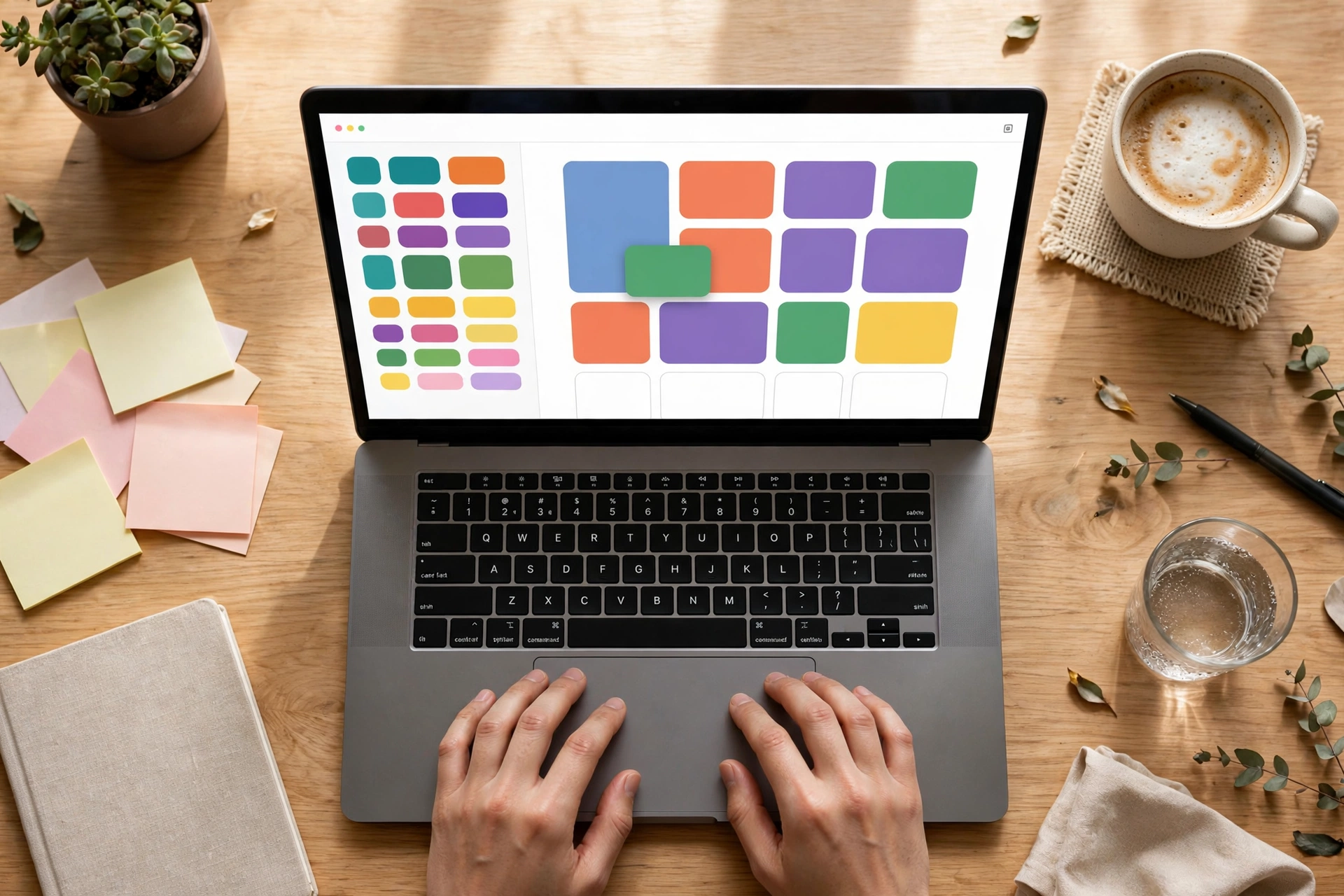
Every few years, the tech industry rediscovers the same prediction: "soon, nobody will need to write code." In 2026, that prediction is wearing a new outfit called no-code — and this time, it deserves to be taken seriously. Not because developers are about to become obsolete, but because no-code tools have quietly become good enough to change who builds software and how.
If you are a developer, a computer science student, or someone considering a career in tech, you have probably felt the anxiety. Clients asking "can't we just do this on a no-code platform?" Bootcamps advertising "build apps without coding." LinkedIn posts declaring that "developers are the new travel agents."
So let us ask the question honestly: should developers worry about no-code in 2026? The short answer is no — but the longer answer is more interesting, and more useful, than the short one.
What No-Code Actually Looks Like in 2026
Forget the clunky website builders of 2018. Modern no-code platforms in 2026 are genuinely impressive. You can build a functional marketplace, a booking system, an internal dashboard, or a mobile app by dragging components onto a canvas, wiring up logic with visual rules, and connecting to payment gateways like Razorpay or Stripe with a few clicks.
The ecosystem has split into layers. At the top are general app builders that let non-technical founders ship real products. Below them are specialised tools for automation (connecting apps together), databases with spreadsheet-like interfaces, and AI-assisted builders where you describe what you want in plain language and get a working starting point.
What changed most since the early hype cycle is reliability. Early no-code apps were fragile toys. Today's platforms handle real traffic, offer proper user authentication, and provide export options so you are not entirely locked in. A small business in Jaipur can now run its entire appointment system on no-code — and it works.
Where No-Code Genuinely Wins
Let us give credit where it is due. No-code dominates in several scenarios, and developers should understand them rather than dismiss them:
- Speed for simple ideas. A landing page with a waitlist, an MVP to test demand, an internal tool for a 20-person team — no-code ships these in days, not months. For validating an idea, that speed is priceless.
- Empowering non-developers. A marketing manager who can build her own campaign dashboard without filing a ticket is genuinely more productive. No-code removes developers as bottlenecks for work that never needed deep engineering.
- Lower cost for standard needs. A restaurant website with online ordering, a salon booking page, a portfolio site — these are solved problems. Paying a developer ₹50,000 for what a ₹2,000/month platform does well is hard to justify.
- Prototyping and demos. Even professional developers now prototype in no-code before writing a line of production code. It is faster to show a client something clickable than to describe it in a document.
The honest takeaway: for a large class of simple, standard applications, no-code is now the rational choice. Fighting that reality is like a photographer in 2010 insisting phone cameras would never matter.
Where No-Code Hits a Wall

But walls exist, and they appear faster than the marketing suggests. The first wall is customisation. No-code platforms give you building blocks; the moment your requirement does not match a block, you are stuck — filing feature requests, building ugly workarounds, or discovering the platform "doesn't support that yet."
The second wall is scale and performance. A no-code app handling 100 users is fine. Handling 100,000 with complex queries, background jobs, and tight latency budgets is a different universe. Platforms have improved, but physics is physics: abstraction layers cost performance, and at scale, those costs compound.
The third wall is cost at scale. No-code pricing looks cheap until you succeed. Per-user fees, workflow-run limits, and premium tiers can turn a "cheap" solution into something far more expensive than a developer-built alternative. Several startups have publicly shared stories of migrating off no-code after their monthly platform bill crossed what an engineer would have cost.
The fourth wall is ownership and lock-in. When your entire business runs on someone else's platform, their pricing changes, feature removals, and outages become your emergencies. Export options have improved, but migrating a complex no-code app to custom code is rarely the clean "export" the brochures promise.
The Real Impact on Developer Jobs
Here is the question developers actually care about: will no-code reduce the demand for developers? The evidence so far says the opposite — and the reason is worth understanding.
No-code has dramatically expanded the total amount of software being built. Every small business that builds its first no-code app discovers ten more things it wishes the software could do. Many of those wishes eventually require a developer. No-code does not shrink the pie; it grows the pie and changes which slices developers eat.
What is shrinking is the market for commodity implementation — building the hundredth standard CRUD app or brochure website from scratch. If your entire value proposition was "I can build a basic website," no-code (and AI tools) have genuinely commoditised that. But that was never a durable career moat anyway.
Meanwhile, new developer roles have appeared that barely existed five years ago: no-code consultants who architect complex platform setups, integration specialists who connect no-code tools to custom backends, and "escape engineers" who migrate successful no-code products to custom stacks. The ladder moved; it did not disappear.
The Indian Angle: Services, Freelancers, and Startups

India's tech economy makes this story especially interesting. The IT services industry — which employs millions — has historically thrived on exactly the kind of standard enterprise application work that no-code now handles well. Large service companies are not ignoring this; they are building no-code practices, training existing staff, and selling "faster delivery" to clients. The smart firms are surfing the wave, not denying it.
For freelancers, no-code is a double-edged sword. On one side, clients with small budgets now ask for no-code builds at lower rates. On the other, freelancers who master both no-code and custom development can offer something rare: start fast on no-code, extend with real code where it counts, and migrate when the client outgrows the platform. That hybrid skill commands a premium.
For startups, the calculus is practical. Non-technical founders in 2026 routinely launch on no-code, validate with real users, and only hire developers after product-market fit. This is healthy — it means developers join startups that have already proven demand, instead of building beautiful products nobody wants. Fewer doomed startups is good for everyone.
For students, the message is clear: no-code literacy is now table stakes, like knowing spreadsheets. But it is not a substitute for computer science fundamentals. Employers hiring for serious engineering roles still test data structures, system design, and problem-solving — things no drag-and-drop tutorial teaches.
No-Code Plus Code: The Hybrid Future
The most interesting development of 2026 is not no-code versus code — it is the blending of the two. Modern platforms increasingly offer "escape hatches": custom code blocks inside visual builders, API access to everything, and the ability to export to real frameworks.
Professional developers are adopting a pragmatic pattern: prototype or build the standard 80% in no-code, then write custom code for the 20% that is genuinely unique. A developer who can move fluidly between both worlds delivers faster than a purist on either side.
This hybrid skill is also where the money is. Clients do not care about your ideology; they care about working software delivered on time and on budget. The developer who says "I will build the standard parts on a platform in two weeks and hand-write the custom billing logic" wins the project over both the no-code-only freelancer and the "everything from scratch" purist.
How Developers Can Stay Ahead
So, practically, what should you do? A short playbook:
- Learn one no-code platform properly. Not to become a "no-code developer," but to understand what it can and cannot do. That knowledge makes you dangerous in client conversations.
- Go deeper on fundamentals. System design, databases, security, performance — these are the things no-code cannot touch, and they are exactly what senior roles pay for.
- Specialise in the hard parts. Integrations, migrations, custom components inside no-code platforms, scaling — the seams between no-code and code are where developers are most needed.
- Build in public. A portfolio of real projects — including honest write-ups of why you chose code over no-code for each — is the strongest possible signal to employers and clients.
- Stay curious, not fearful. Every wave of "developers are doomed" — from visual basic to WordPress to outsourcing — ended with developers doing more interesting work, not less.
The developers who should worry are the ones who refuse to adapt. The developers who learn the new tools, understand their limits, and keep deepening their fundamentals have never been more valuable.
Frequently Asked Questions
Q: Will no-code replace web developers by 2030?
A: Extremely unlikely. No-code keeps absorbing the simplest, most standard work — which pushes developers toward more complex, higher-value problems. The total demand for people who deeply understand software continues to grow. What disappears is the low end of commodity implementation, not the profession.
Q: Should I learn no-code as a computer science student?
A: Yes, as a complement — not a replacement. Spend a weekend building something on a no-code platform so you understand the paradigm. Then invest the vast majority of your time in programming fundamentals, which is what technical interviews and serious engineering roles actually test.
Q: I am a freelancer losing small projects to no-code. What should I do?
A: Reposition, don't compete on price. Offer hybrid builds (fast no-code foundation + custom code where it counts), maintenance and migration services, and honest consulting — "you don't need a developer for this" is a trust-building sentence that wins you the projects that actually need one.
Q: Can a startup scale on no-code permanently?
A: Some do, for a long time — especially content, marketplace, and internal-tool businesses with standard needs. But most startups that find real traction eventually hit customisation, performance, or cost walls and migrate partially or fully to custom code. Plan for that migration from day one: keep your data exportable and your architecture documented.
Download free source code: The best answer to no-code anxiety is building real things with real code. Start here: this free to-do list app source code (HTML/CSS/JS with localStorage) is a perfect weekend project — study how it works, extend it with features no drag-and-drop builder would give you, and put it in your portfolio. Free download, no signup needed.
Keep reading

Google's October 2026 Search Updates: What Changed & What Indian Small Websites Must Do
Google's October 2026 search updates changed AI search, quality rules and spam enforcement. Here's what's confirmed versus what's just industry chatter, plus 7 practical SEO moves for Indian small websites.
Read article
New UPI Rules in 2026: Transaction Limits, Merchant Charges & What Indian Small Businesses Must Do
UPI's biggest policy shift is here: 0.4% merchant charges above ₹2,000, ₹5 lakh limits for tax and hospital payments, UPI Lite upgrades and new fraud alerts. What changed, what's still free, and what Indian small businesses must do.
Read article
Google October 2026 Core Update: What Changed and What Indian Website Owners Must Do
Google's October 2026 core update tightens helpful-content standards: what changed, who is affected, and 5 practical moves for Indian bloggers, freelancers, and small website owners.
Read article