India's UPI Boom in 2026: What It Means for Small Businesses
UPI now powers billions of payments every month. Here's what India's 2026 UPI boom means for your small business — from zero MDR to setup checklists.
 CodeFree Team
October 06, 2026
7 min read
CodeFree Team
October 06, 2026
7 min read
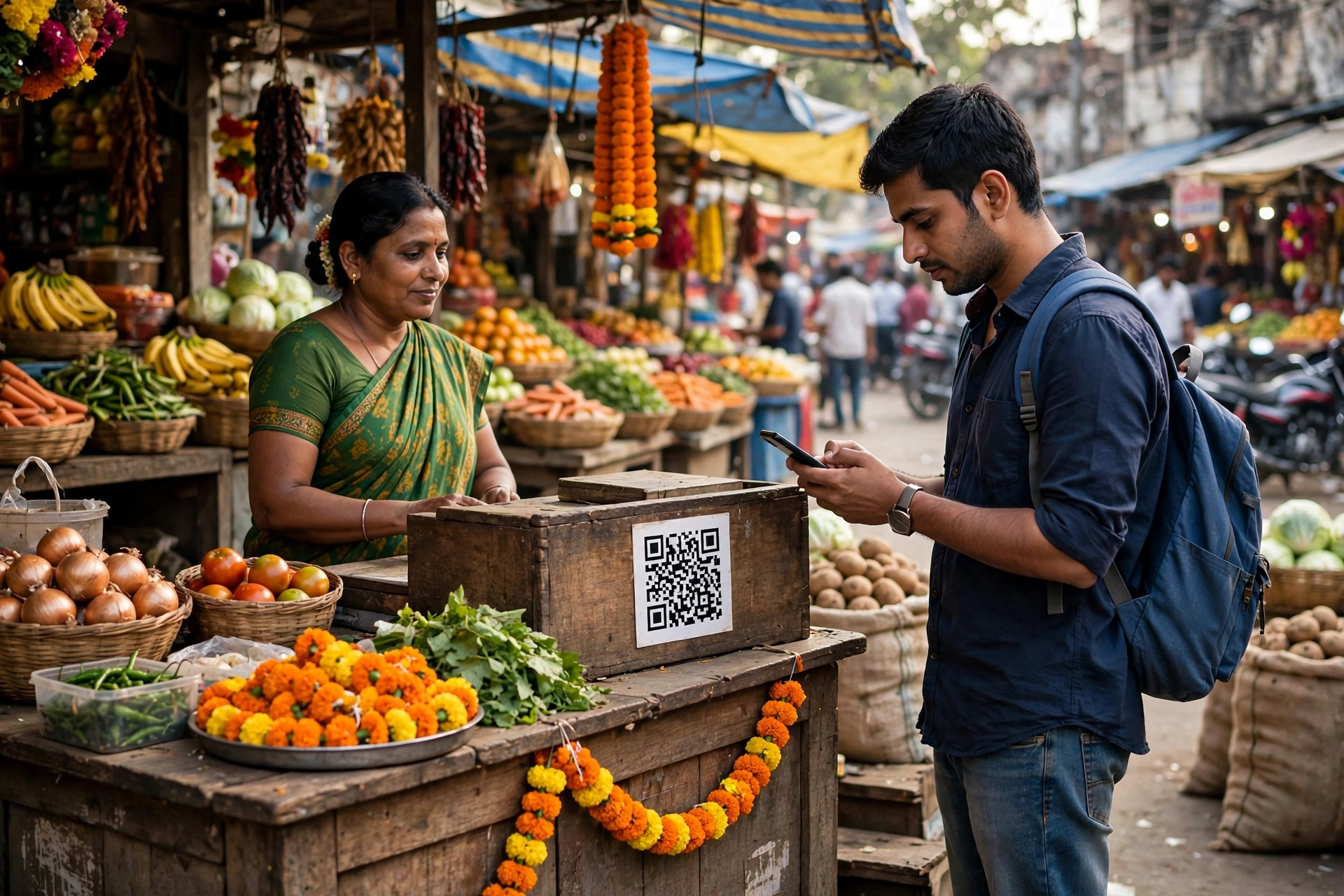
Walk into almost any shop in India in 2026 — from a mall store in Mumbai to a tea stall in Indore — and you will see the same small laminated QR code stuck near the cash counter. In less than a decade, UPI has gone from a government experiment to the default way India pays, processing tens of billions of transactions every single month, worth lakh crores of rupees.
For small business owners, this is not just trivia — it is the single biggest shift in how money reaches your shop since the arrival of the cash register. This article breaks down where UPI stands in 2026, which new features actually matter for merchants, and exactly how to ride the wave instead of being swept away by it.
1. UPI in 2026: The Scale Is Hard to Overstate
Consider the trajectory: UPI now handles well over ten billion transactions a month, and its share of India's digital payments keeps climbing year after year. Person-to-merchant payments — the QR-code scans at shops like yours — make up a huge and growing slice of that volume. UPI acceptance has also expanded internationally, so the same QR code that serves your neighbourhood customers can now serve foreign tourists in several countries too.
What does this mean for you? Simply put, digital payment in India now means UPI first and everything else second. Card swipes, netbanking links, and wallets all still exist, but the customer's thumb reaches for a UPI app by default. A business that isn't UPI-ready in 2026 looks, to a growing share of customers, like a business stuck in 2016.
2. Your Customers Already Expect UPI — Even for ₹20

The most remarkable thing about the UPI revolution is how far down it has travelled. It's not just supermarkets and restaurants — it's the vegetable vendor, the auto rickshaw driver, the paan shop, the roadside dhaba. When a customer asks "UPI chalega?" and the answer is no, a surprising number simply walk to the next shop.
This matters most for impulse purchases. Nobody carries exact change anymore; the friction of "sorry, only cash" kills small spontaneous sales that add up over a month. Accepting UPI removes that friction entirely. It also builds trust — customers feel safer paying a traceable digital amount than handing over cash, and that trust converts directly into repeat visits.
3. Zero MDR: The Quiet Superpower for Small Merchants
Here's the part many small business owners underestimate. When a customer pays by credit or debit card, the merchant typically loses around 1–2% of the transaction to the Merchant Discount Rate (MDR). On UPI person-to-merchant payments made directly from bank accounts, the MDR is zero. Every rupee the customer pays is every rupee you receive.
Do the maths on your own business: if ₹40,000 of your monthly sales moves from cards to UPI, you save roughly ₹600 a month — over ₹7,000 a year — for doing absolutely nothing different. That saving compounds if you put it to work. Wondering what those savings could grow into over a few years? Plug the numbers into our free SIP calculator on CodeFree and see how small monthly savings turn into serious money when invested regularly.
4. New UPI Features That Actually Help Businesses in 2026

UPI is no longer just "scan and pay." Several newer features are genuinely useful for small businesses:
- UPI Autopay: perfect for recurring billing — gyms, coaching classes, SaaS products, school fees, and maintenance charges can now be collected automatically with the customer's one-time approval.
- Credit on UPI: pre-approved credit lines and RuPay credit cards now work on UPI rails, which means customers with thin credit histories can still pay you digitally — expanding your paying customer base.
- UPI 123Pay: customers without smartphones can pay via missed calls, IVR, or feature-phone apps, so you never lose a sale to "I don't have a smartphone."
- Instant soundbox confirmations: affordable speaker devices announce "₹150 received" the second a payment lands, killing the fake-screenshot scam and speeding up your counter.
5. Start Accepting UPI This Week: A Practical Checklist
Getting set up is an afternoon's work. Here's the checklist:
- Get a business UPI ID through your bank or a business app like Google Pay for Business, PhonePe Business, Paytm for Business, or BHIM. A dedicated business ID keeps your personal and business money separate from day one.
- Print QR standees and stickers — order 2–3 and place them where customers naturally look: the billing counter, the entrance, and near the exit.
- Get a soundbox or payment speaker so every payment is announced aloud. It costs little and eliminates 90% of payment disputes.
- Open a separate current account for business UPI settlements if you haven't already. Mixing business income into a savings account creates an accounting mess at tax time.
- Train your staff on one golden rule: goods change hands only after the payment confirmation appears on your device, never on the customer's screenshot.
6. Costly Mistakes Small Businesses Still Make with UPI
The biggest mistake is using a personal UPI ID for business. It muddies your books, complicates tax filing, and can hit transaction limits at the worst moment. Second is the screenshot trap — handing over goods because the customer showed a "payment successful" screenshot. Screenshots can be faked in seconds; your own app or soundbox cannot.
Third, many merchants ignore reconciliation. UPI money arrives fast, which makes it easy to assume everything is fine — until month-end reveals missing settlements or unrecorded refunds. Spend ten minutes daily matching your UPI settlements against your sales register. Finally, have a clear refund policy for failed transactions: tell the customer exactly when the auto-reversal will reach them (usually within 3–5 working days) instead of arguing at the counter.
Make your savings work as hard as you do: the money you save with zero-MDR UPI payments adds up fast. Try our free SIP calculator to see what investing those monthly savings could build over 5 or 10 years — it's the easiest financial planning you'll do this week.
Frequently Asked Questions
Q: Is UPI really free for merchants? Are there any hidden charges?
A: Standard UPI payments made directly from a customer's bank account to your QR carry zero MDR — genuinely free. The business apps themselves are free; a soundbox device may involve a small monthly rental. Only certain prepaid wallet or credit-linked transactions above specific thresholds can attract interchange fees, which don't affect ordinary QR collections.
Q: Do I need a current account or GST registration to get a business UPI QR?
A: No. A regular savings account works with most business UPI apps, and GST registration is not required to accept UPI. That said, a current account keeps your business finances clean and is worth opening as soon as volumes grow.
Q: A customer's payment is stuck on "processing." What should I do?
A: Do not hand over the goods yet. Ask the customer to check their bank app or UPI app for the final status, and check your own app or soundbox. Most stuck payments either complete within minutes or auto-reverse to the customer within 3–5 working days. Never accept a screenshot as proof.
Q: Can I accept UPI if I don't have a smartphone?
A: Yes. UPI 123Pay lets customers pay you via missed call, IVR, or feature-phone apps, and a soundbox gives you audio confirmation of every payment without needing a smartphone yourself. Your printed QR code works the same regardless.
Keep reading

Google's October 2026 Search Updates: What Changed & What Indian Small Websites Must Do
Google's October 2026 search updates changed AI search, quality rules and spam enforcement. Here's what's confirmed versus what's just industry chatter, plus 7 practical SEO moves for Indian small websites.
Read article
New UPI Rules in 2026: Transaction Limits, Merchant Charges & What Indian Small Businesses Must Do
UPI's biggest policy shift is here: 0.4% merchant charges above ₹2,000, ₹5 lakh limits for tax and hospital payments, UPI Lite upgrades and new fraud alerts. What changed, what's still free, and what Indian small businesses must do.
Read article
Google October 2026 Core Update: What Changed and What Indian Website Owners Must Do
Google's October 2026 core update tightens helpful-content standards: what changed, who is affected, and 5 practical moves for Indian bloggers, freelancers, and small website owners.
Read article